
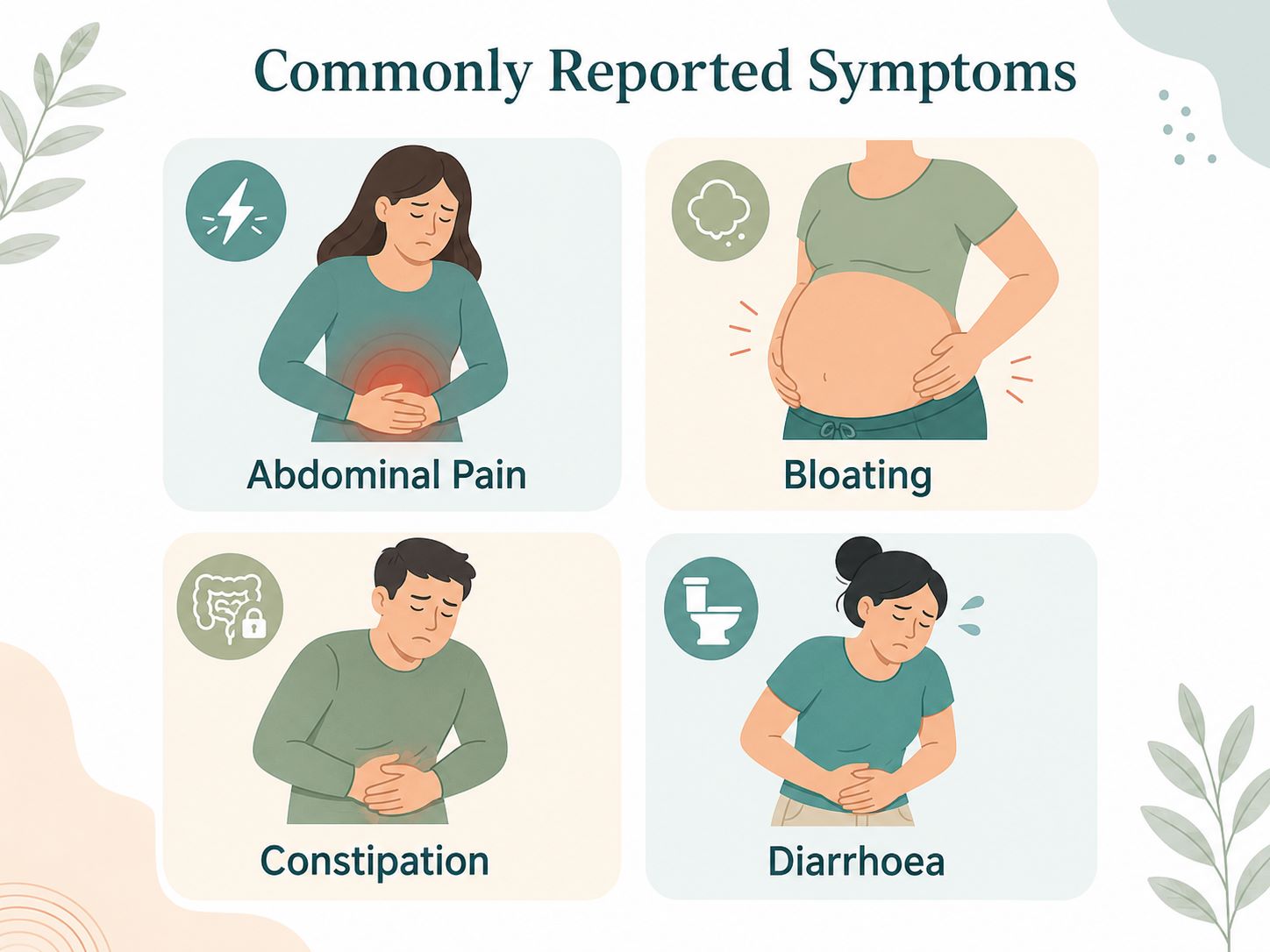
Bloating, abdominal pain, constipation and diarrhoea are often labelled as IBS symptoms, especially when they keep returning. It is understandable to search for an explanation when your digestion feels unpredictable. However, these symptoms do not automatically mean that you have irritable bowel syndrome.
IBS is a recognised digestive condition, but several other problems can cause similar discomfort. That is why it is more helpful to look at the full pattern, when symptoms started, how often they occur, what makes them better or worse, and whether any warning signs are present, rather than relying on a quick online checklist.
This article will help you understand common IBS symptoms, what else may need to be considered and when to speak to a medical professional. It is educational and should not be used to diagnose yourself.
What is IBS?
Irritable bowel syndrome, usually shortened to IBS, is a long-term condition involving recurring abdominal pain and changes in bowel habits. Those changes may include constipation, diarrhoea or a mixture of both. IBS does not usually cause visible damage to the digestive tract, but the symptoms can still be painful, disruptive and exhausting.
IBS is commonly described as a disorder of gut–brain interaction. In simple terms, the gut and brain may communicate differently, affecting bowel movement, sensitivity and how strongly normal amounts of gas or stool are felt. This does not mean that symptoms are imaginary or “all in your head”.
What are the most common IBS symptoms?
The most common IBS symptoms include:
- Abdominal pain or cramping, often linked to opening your bowels
- Bloating or a visibly swollen abdomen
- Diarrhoea, constipation or alternating between the two
- Urgency or feeling that you have not emptied your bowels completely
- Excess wind
- Mucus in the stool
- Symptoms that improve and worsen over time
For some people, pain improves after a bowel movement. For others, eating, stress, travel, poor sleep or certain foods may appear to trigger a flare. The pattern is highly individual, which is one reason generic food lists are not always helpful.
Why IBS symptoms can be confusing
Many digestive conditions share the same basic language: pain, bloating, gas and changes in stool. Your body does not provide a neat label telling you exactly which condition is responsible.
Symptoms that resemble IBS may also occur with coeliac disease, inflammatory bowel disease, bowel infections, lactose intolerance, other carbohydrate intolerances, constipation, medication side effects or small intestinal bacterial overgrowth. This does not mean you have one of these conditions. It means the context matters, and persistent symptoms deserve an appropriate assessment rather than guesswork.
If you are already eating well but still struggling, you may also find Why Healthy Eating Isn’t Always Improving Your Symptoms helpful.
IBS or IBD: what is the difference?
IBS and inflammatory bowel disease, or IBD, are not the same condition.
IBS affects how the gut functions and how sensations are processed, without visible damage to the digestive tract. IBD is an umbrella term for inflammatory conditions including Crohn’s disease and ulcerative colitis. IBD may cause persistent diarrhoea, abdominal pain, blood or mucus in the stool, fatigue and unintended weight loss.
Because some IBS symptoms overlap with IBD, blood tests, stool tests or further investigation may sometimes be needed. The purpose is not to alarm you. It is to make sure symptoms are assessed properly.
Can food intolerances look like IBS?
Yes, food intolerance symptoms can overlap with IBS symptoms. Some people notice bloating, pain, loose stools or excess gas after particular foods. Lactose, for example, can cause symptoms in people who do not digest it well.
However, feeling uncomfortable after eating does not always identify one specific intolerance. Portion size, meal timing, fibre intake, stress, constipation and the combination of foods eaten can all influence how you feel.
This is why removing multiple food groups without a clear plan can become unhelpful. You may end up with a very restricted diet while still being unsure what is causing the problem. A structured approach should aim to preserve as much variety as possible.
Is there a test for IBS?
There is no single blood test, scan or stool test that confirms IBS. A doctor usually reviews your symptom pattern, medical history and family history, and may examine your abdomen.
A diagnosis of IBS should therefore be based on a recognised symptom pattern, with appropriate checks and no concerning warning signs, not simply on the fact that you feel bloated.
When should you seek medical advice?
Speak to a doctor if you think you may have IBS and your symptoms have lasted longer than four weeks. Seek prompt medical advice if you have:
- Unexplained weight loss
- Bleeding from the bottom, bloody diarrhoea or black stools
- A hard lump or swelling in your abdomen
- Signs of anaemia, such as unusual breathlessness, palpitations or pale skin
- Severe or rapidly worsening abdominal pain
- Persistent symptoms that are new or clearly different from your usual pattern
These symptoms do not automatically mean something serious is wrong, but they should not be dismissed as ordinary IBS symptoms.
What should you track before an appointment?
You do not need a colour-coded spreadsheet worthy of a scientific conference. A simple record for one or two weeks can be enough to reveal useful patterns.
Note:
- When pain, bloating or bowel changes occur
- Stool frequency and consistency
- Whether symptoms improve after opening your bowels
- Meals, snacks and drinks
- Recent medication or antibiotic use
- Stress levels, sleep, travel and menstrual-cycle changes
- Any foods you have already removed
- Whether symptoms wake you at night or affect daily activities
The aim is curiosity, not perfection. A diary gives your doctor or nutrition professional more useful information than “my stomach is always bad”, even though that feeling is completely understandable.
For more support with bowel patterns, read All You Need to Know About Constipation.
What can you do while waiting for answers?
Avoid making several drastic changes at once. When you remove gluten, dairy, fruit, legumes and anything vaguely enjoyable in the same week, it becomes almost impossible to know what helped.
Instead, focus on basic, low-risk habits:
- Eat regular meals rather than skipping food and overeating later
- Slow down and chew thoroughly
- Drink enough fluid
- Increase fibre gradually rather than suddenly
- Notice whether caffeine, alcohol, fizzy drinks or very rich meals affect you
- Include gentle movement and realistic stress support
- Keep your diet varied unless a qualified professional advises otherwise
You may also like Gut Health for Beginners: Where Do You Even Start?.
Why personalised nutrition matters for IBS symptoms
Two people can report the same IBS symptoms and need completely different support. One may be constipated and eating too little fibre. Another may have increased fibre very quickly. One may react to irregular meals, while another notices symptoms during stressful periods or after certain carbohydrates.
Personalised nutrition does not replace medical diagnosis. Its role is to help you look at food, bowel habits, lifestyle, symptom timing and previous test results together. This can help you make targeted changes without unnecessarily restricting your diet or chasing every gut-health trend online.
At Fix Me Nutrition, the aim is to help you feel informed, supported and more confident about your food choices. The approach is evidence-based, practical and tailored to your lifestyle rather than built around promises or one-size-fits-all rules. This reflects Fix Me Nutrition’s focus on holistic, personalised guidance and realistic, sustainable plans.
Explore personalised gut health support for guidance alongside appropriate medical care.
Final thoughts
So, is it IBS or something else? The honest answer is that symptoms alone do not always tell the full story.
IBS symptoms are real and can have a significant impact on daily life, but self-diagnosis can lead to confusion, unnecessary food restriction or missed opportunities for proper investigation. Start by noticing patterns, seek medical advice when symptoms persist, and pay attention to warning signs.
You do not need to solve everything by yourself. The goal is not to find a perfect diet or a magic fix. It is to understand your body more clearly and take the next sensible step.